• Skip to main content

Authority Owl - Smart Affiliate Marketing

Affiliate marketing case studies, training, and indispensable tips, perfect for beginner and intermediate affiliates

  • Affiliate Marketing for Beginners
  • About Me
  • Contact

Andy

Aug 07 2021

Urgent! Read this BEFORE Registering Your Domain and Signing up for Hosting

"A better domain name will lower your lifetime marketing costs." - Frank Schilling

Click to Tweet

Finding the best brand name or business domain name can be as difficult as naming a child. There are so many options to choose from, and each name can reflect a unique identity and communicate an important message to the outside world.

Choosing a business domain name that does not adequately reflect your brand may compromise your integrity from the start and shrink your potential market.

Selecting the optimal business domain name conveys instant credibility and separates you from perceived fly-by-night competitors.

So if you’re in search of the best domain name, but uncertain how to find it, let this article guide your way. 

Here are 5 quick tips to follow in the quest to find the best business domain name, even if you opt to use a free online domain generator


Table of Contents
1.
1. Think About Your Brand, Using a Dash of Creativity and Memorability
2.
2. Keep the Name Short, Catchy, and Unforgettable
3.
3. Avoid Common Domain Naming Mistakes
4.
4)  Think Long-Term 

5.
5) Become a .Com Proponent 
5.1
Purchasing Your Ideal Business Domain
5.1.1
Hosting Your Domain 

1. Think About Your Brand, Using a Dash of Creativity and Memorability

What message do you want your domain name to convey about your entity? 

Consider two of the behemoths in the domain registry industry, GoDaddy and Namecheap.

GoDaddy is an easy to remember name, reflecting that they’re among the leaders in their field, although the name itself does not reveal the field. The name suggests that they’re here to help, pushing forward in their pursuit of excellence.

Namecheap imparts the message that the domains they can provide for their customer base are cheap and affordable. This domain name is easy to recall, too.

Please don’t feel you have to be wedded to the idea of using niche keywords in your domain name. Using keywords does not impart SEO advantage like it used to.  

There is a common myth that keywords in a domain name will enhance its SEO relevancy score. Again, this is no longer accurate, so you have more naming latitude.  

However, using a keyword or two can help establish your brand identity and recognition. For example, I like the name “Autozone.com” because “auto” conveys what their product line constitutes, and the word “zone” may refer to the zones around cars, the area in which cars travel, or the place where the best car parts can be found.

The name is also short and sweet, which brings us to the next point.

2. Keep the Name Short, Catchy, and Unforgettable

Many times, a link to your site won't be available, so your prospective fan base will have to type your URL in the browser to access it.

Long domain names are harder to recall and more prone to typos. You don’t want to shrink your quantity of visitors simply because they cannot remember your domain name, or incorrectly type it out.

Combinations of two words can work synergistically together, such as “AutoZone.” Catchy phrases, such as “Lifehacker” or “HackSpirit” can further enhance recall.

3. Avoid Common Domain Naming Mistakes

Avoid these common mistakes when selecting a domain name.

Avoid these common domain naming pitfalls.

I’ve learned this point from personal experience. Consider one of the domains I used to own, “Best-Merchant-Account-Companies.com.”

At the time, I thought I was a genius, including all these keywords, improving relevancy score and the potential to rank high for this keyword phrase and similar phrases.

I soon came to the realization that using hyphens poses a problem to those who type it out. It’s very easy to make a mistake typing hyphens. It becomes even more challenging when typing a long domain name.

Indeed, hyphens, numbers, and double consonants, for that matter, are confusing and hard to remember.

Other common errors when naming a domain include using words that are difficult to pronounce or spell, or making it too generic. Domains which lack availability on social networks or infringe upon trademarks are taboo, as well.

It is particularly important not to use another business’s name in your domain. For instance, you can’t call your site “AmazonReviews.com.” 

To ensure you don’t infringe on another entity’s rights, use the Trademark Electronic Search System (Tess) and perform other research, perhaps even consulting with an attorney.

4)  Think Long-Term 

Try to have a concrete vision of your brand before you purchase a domain. In essence, see how it will evolve over time.

You don’t want to limit the scope of your business by selecting a domain that presents a narrow depiction of what you do.    

For example, let’s suppose you have an ecommerce store selling computer books, and you go with “AceComputerBooks.com” as your domain name. Later, if you expand your product line to other types of books and magazines, the domain name no longer reflects your brand.

Changing a domain name can be harmful to your brand and erode your existing progress. 

5) Become a .Com Proponent 
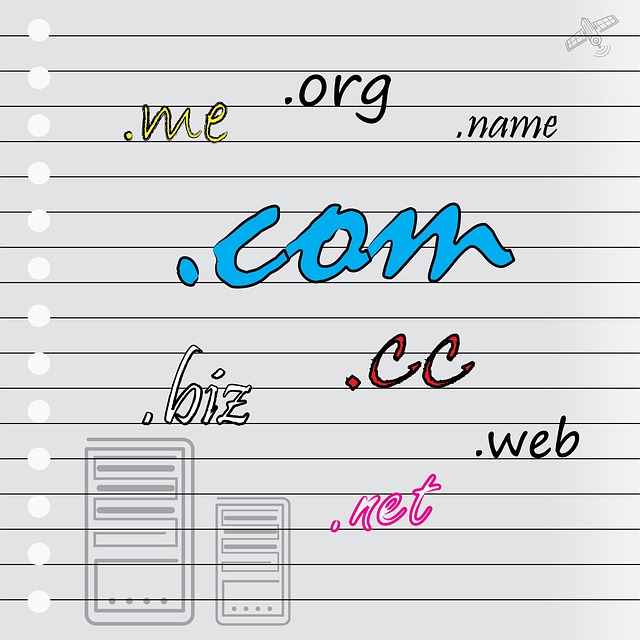
When available, choose a .com extension.

The .com extension is golden Internet real estate.

When you are getting started on your website, one of the first steps is to choose a domain name. As part of that naming process, you have to decide whether to use a .com, .net, .org, or any of the other extensions available.

Try your best to secure a .com extension. It is the best way to increase brand awareness, online traffic, and a sense of professionalism.

So many extensions (.xyz, .life, .site) are not nearly as well-known and trusted as a .com. Similarly, extensions, such as a .network, may not be a good fit for your business if your entity is outside the networking and technology domains.

Top-level domains, which include .com, .net, .org, ..gov, and .edu, are more readily recognized by visitors, and appear more authentic to them.

But it is important to note that a .com domain is more mobile-friendly than its counterparts. Smartphones typically only have a dedicated .com button on the keyboard, which makes typing in .net or .org domains more time-consuming.

If a .com domain is not available and your heart is set on the letters that come before it, you may opt to use a .net extension or .org extension. Choose the one that gives a better overall brand image and perceived credibility.

Purchasing Your Ideal Business Domain

After you’ve played the ‘name game,’ and you’re fully satisfied that it’s the perfect name to represent your brand, it’s time to purchase it.

There are a myriad of companies that can sell one to you, but two reputable ones are GoDaddy and Namecheap. You can purchase a domain for about $10-15 a year, but always look for special deals and coupons.

You may seek to buy a premium domain, a popular web address with great branding and income potential, but that may cost a premium amount. 

Once you secure your domain, you may also decide to add privacy (i.e. where other folks will not know that you registered a domain) but that typically costs extra, depending on the domain registrar. Adding privacy, however, is more than affordable. 

Because there are millions upon millions of dot-com domains registered, it should not be surprising if your first choice in domain names is not available. Many registrars will offer close, alternative names, but again, don’t be in a rush to purchase.

Your domain name is too important. Therefore, think of suitable backup names. and only opt to buy one when you’re fully content with it. 

If you’re absolutely set on a domain that is already taken, you may contact the person or entity who purchased it, assuming the information is not private..

You can bid on other domains or hire a domain agent to secure it on your behalf. GoDaddy, for instance, has a domain buy service where they can broker a deal for you.

Regardless of how you get your domain, remember it’s all about building a brand and positioning your brand.

Hosting Your Domain 

Always look for the most reliable host for your domain.

Look for a host that offers the most.

After your goal-setting exercise and domain purchase, your business is taking shape.

You’re moving in the right direction.

You’re now a proud owner of a domain, but it has to live somewhere in cyberspace. While you can use free platforms, such as Blogger or WordPress, it’s helpful to build your own cyber property on your server. (Well, for most of us, we will share a server.)

There are countless hosting companies, but three I recommend, from my own personal experience, are SiteGround. A2 Hosting, and GreenGeeks.

These hosting companies, particularly Siteground and A2Hosting, are a little more expensive than others but I’ve found that they group fewer sites on a server which eliminates most problems (where other sites cannot adversely affect you) and adds to a faster web page loading speed, a criterion for better ranking.

The technical support has been fantastic, so when I experience issues with my sites, they’re addressed quickly.

A mere search for ‘hosting companies’ on Google will reveal a plethora of choices. Perform your own due diligence and see which one offers you the options that you’re looking for.

Again, search for discounts and promotions. Hosting entities particularly provide new customers with the best pricing, so take advantage of it as you’re being wooed.

With domain and hosting selection out of the way, you’re ready to set up your shingle in cyberspace. It’s now only a matter of gaining recognition and trust among your audience. 

Written by Andy · Categorized: Getting Started

Jul 22 2021

Want to Create a Million Dollar Brand? – Learn How to Choose a Business Name

"When people use your brand name as a verb, that is remarkable." - Meg Whitman

Click to Tweet

What is in a (business) name?

Begging your pardon, Mr. Shakespeare, but a business’s name can be the be-all, end-all and influence buying decisions.

Case in point: I remember watching a show called One Tree Hill where one character launched the fictional women’s fashion line, "Clothes Over Bros."

The name is easy to remember, depicts the industry, underscores the importance of the product, and appeals to the independent-minded woman who dresses for herself and not for men.

In the show, the line enjoyed mega success, but it’s my fervent belief that the name contributed to that success.

In the competitive online world, the name of your site, product line, or service can make or break you should you decide to pursue entrepreneurship.

For instance, Mike Thomas built a website and business, Mike from Maine, that is also simple to recall. It has that alliteration, altering sounds of words with a consonant that is repeated. It just rolls off the tongue.

Mike depicts himself as the "average guy" from a state that is regarded as unpretentious, if that makes sense. If Mr. Average can succeed, Mike wants you to believe that you can also succeed.

He built a brand, and that is precisely what you have to build as well. You can use your name and brand yourself, or you can think of a name that is a descriptor of what you do.

You can even think of a name that has no apparent reference to anything as long as it’s catchy.

You may decide to use a play on words, such as the company "Branditory." Here, this entity is underscoring that it helps visitors learn about brands, and that it can offer folks support in finding the perfect business name. 

The name, Branditory, suggests that it’s almost mandatory to access their brand’s service if you want the perfect name for your entity.

(I'm not sure if the company is still in existence, but if they're no longer in business, it's not because of their name.)

By the way, I encourage you to come up with your own brand name, and not pay for any expensive service. There are Fiverr gigs where you can enlist others' support if you need help in creating the ideal business name, logo, and tagline, too.)

Regardless of how you approach devising your business name, do so with great care. A poorly constructed name will already place you at a competitive disadvantage.

Be careful not to choose a name that limits your business model. For instance, if you launch a site, "AmysAcneArsenal.com," it will be difficult for Amy to broaden her skin care content. It would not make sense if she discussed anti-aging, anti-wrinkle products.

Also, be mindful of not limiting yourself to a geographical location, if that is not your intent. Yes, Mike from Maine used a location reference, but the purpose seems to brand himself than to suggest that prospective customers in Maine are his focal point.

If I started a business selling credit card processing accounts where the potential customer pool is nationwide, it may not be the best idea to call my company, “Southwest Jersey Merchant Services.” (But I concede that such a name has not hurt Southwest Airlines.)

Let's consider the following possible options when creating your brand identity and name. 

Brand name estabishes brand identity.

Your brand name is instrumental in building your brand identity.


Table of Contents
1.
Business Name Option 1: Keep in Simple  
2.
Option 2: Keep the Name Relevant 
3.
Option 3: Use Catchy Alliteration and Rhyming

4.
Option 4: Pull on Emotional Strings   
5.
Option 5: Go Big   
5.1
Final Thoughts on Entrepreneurial Gain by Choosing the Right Business Name

Business Name Option 1: Keep in Simple  

A fresh, simple name may propel your brand far. Your customers will more readily remember your brand. 

(Business names that include an animal and/or colors are simple enough to remember: SendOwl, Purple Cow, and Red Bull are examples of this type of concept.)    

When creating a business brand name, ensure that it is easy to pronounce.  One with fewer letters to type is preferable to a longer name.  Examples include Google, Nike, Ikea, Greyhound, and the like.

You may decide, however, to create a descriptive business name.

Option 2: Keep the Name Relevant 

If you pursue this option, make certain that it describes your operations or what the business is about.

Here, you have to think about your customer avatar (i.e., a representation of your average customer's wants and needs), your company's mission and values, and your unique business proposition.

Descriptive business names include Toys "R" Us, General Motors, Hotels.com, and a myriad of others that often include the word, "Best." before the name.   

Similar in scope, you may decide to name your business with geography in mind if it you believe it will help to support your brand concept. Boston Scientific, The Hartford, and American Express exemplify this principle.

Option 3: Use Catchy Alliteration and Rhyming

The idea to use catchy alliteration and/or rhyming has been brilliantly implemented by companies like Coca-Cola, Dunkin' Donuts, LifeLock, Piggly Wiggly, Fry Guys, and Pace Place.

These names roll off the tongue and seep into the brain, making them more difficult to forget.

The more customers remember you, the greater the probability that you will realize profits. Of course, a catchy, cool name is only the first step to achieve successful branding — but an extremely important one.

Your catchy name can catch your (prospective) customer's attention, but follow up with superior product and service.

Option 4: Pull on Emotional Strings   

One way to galvanize instant interest in your brand is to name your business entity with a powerfully touching word or words. By sparking a connection with someone's heart and brain, you'll increase the likelihood that they'll patronize your business.

Business names incorporate words like thrive, honest, brave, inspire, and the like. We associate such words with positive connotations — exactly what you want others to associate with your business.

You don't just have to be an environmental organization, such as GreenPeace, to use this type of naming option. Think about what feelings you want your name to evoke and play off that concept.

For example, the company, Benefit, has done well, as they want to highlight that their cosmetic products foster ... well, benefits!

Option 5: Go Big   

Even a small startup can look much bigger than it is, and it starts with a larger-than-life name.

Worldwide Wine is an example of such a concept. The business name suggests that they sell their wine to folks on the entire planet, the favored alcoholic beverage all around the world. I’m confident such an impression helped this company at its humble earliest beginnings.   

When I first dipped my toe into the entrepreneurial world, I named my company “Universal Solutions.” (It was a tutoring entity.)

Upon retrospect, I may have been more creative in coming up with a business name, but I used the word, universal, to suggest that my company was large in scope and huge in results.


Final Thoughts on Entrepreneurial Gain by Choosing the Right Business Name

This is no hyperbole, but choosing the right business name can make or break you, or at the very least, affect your bottom line.

For instance, if you choose a name that limits your growth, is difficult to spell, has no associated domain available, or too hard to pronounce, you’re already trekking uphill.

Similarly, if your business is composed of uncommon words, too general in scope, or so banal that it can't set your company apart from the competition, you’re already at a decided disadvantage.

Worse, do not make the error of using a name that already exists! Check for availability, trademark rights, and DBA records (or any other source) to ensure that it is legal for you to use your preferred business name.

You may even decide to use legal counsel to ensure that your business name is unique.

Naming your business is all-important and may be a time-consuming process.

But once you formally declare it, your clever business name may open doors for you in the market you seek to thrive. 

Written by Andy · Categorized: Getting Started

Jul 14 2021

OMG! Creating the Best Business Plans and Objectives Ever!

"If you don't know where you're going, you will probably end up somewhere else." - Lawrence J. Peter

Click to Tweet

As your vision becomes more crystalline, stronger and concrete, it’s time to set some business goals and objectives.

The operative question arises: What are goals and objectives?

Let’s examine what they really are:

* They’re desired future conditions and outcomes that are predicated on taking specific action;

* They revolve around tasks to fulfill;

* They set a higher standard in terms of end results, but still realistic to attain; and

* They’re meant to serve as accountability barometers which motivates you toward action

Goal setting helps to ensure progress and productivity. For instance, as a writer, I may set a minimum number of words to write per day - say, 3000, without compromising quality should I go over that benchmark.

Here are some other purposes for goal setting:

* Prioritize tasks - You should have short-term and long-term goals. Even if you don’t write them down (although it would be better if you jotted them down), formulate daily goals to meet.

As an entrepreneur, you’ll have an unending stream of tasks to complete. A daily goal plan will help you determine which tasks need your immediate attention and which ones can wait.

* Goals will help you track your progress, or lack thereof, if applicable - You’ll immediately be able to see if you’ve reached the benchmarks you’ve created.

Under no circumstances should you alter goals, setting the bar lower, to accommodate procrastination or laziness. Let the goals propel you to work harder, and refuse to take shortcuts.

* Goals will prevent you from becoming distracted - When I’m having a very unproductive day, I look at my daily ledger and see my intended goals for that day. When I fall short, I simply become much more focused at night, trying to make up for any foot-dragging.

The idea is not to let goals pressure you negatively where you’re feeling overwhelmed and helpless trying to complete them.

They’re merely a reminder of your potential. Just recall when you initially made them and the mindset you possessed when you created them. You thought you could accomplish certain tasks then. There’s no reason to think that you can’t accomplish them now ... unless such goals were unrealistic.

7 Common Characteristics of Effective Business Goals

Become a better goal setter by learning how to properly set goals.

Learn how to set business goals and objectives to remain on target, and optimize the chances for success.

Now that you have a firm idea of what business goals are and what their purpose is, it’s vital to understand how to construct effective business goals.

Here are 7 characteristics that will make you an exemplary business goal setter:

1) Goals should challenge - Perhaps at the beginning of your entrepreneurial venture, you can make the goals a little easier to attain. Once you see small successes, you’ll have the confidence to achieve bigger ones.

But ultimately, goals should be sufficiently challenging to require a sizable amount of effort. You can’t accomplish great things over time if you’re not accomplishing important tasks each day.

Again, goals should not be virtually impossible to reach. Sure, I wish I could write 20,000 words a day, but I accept the fact that I’m not that kind of prolific writer. It’s all about knowing yourself, your skill set, and the time that you can allocate to an endeavor.

Challenge yourself without undermining and discouraging yourself.

2) Goals and objectives must be descriptive - You must avoid writing goals that are vague. If you cannot concretely see all the details involved, it’s time to develop a new plan.

This is not just applicable to business goals but personal ones as well. Visualize that financial windfall that is about to occur - where you’re living, how you’re spending your time and money, and how you’re continuing to grow as a person and a marketer.

See the intricacies of your world when you meet specific business objectives.

3) Goals should be time dependent - It may not be a question of now or never as success can occur at any point of time. However, when you devise goals, it’s imperative that their time-focused.

For example, my short-term goal is to write and add 4 blog articles to this 'Getting Started’part of the website in the next 4 weeks. If I don’t place any time restrictions on this goal, I may procrastinate with this task, or I may choose never to finish it.

While time constraints can pressure you, they also can motivate you and propel you toward purposeful action.

Set short-term business goals along with those that are long term. These types of goals will support your day-to-day activities.

4) Goals should encompass milestones - Examine school textbooks and notice how each chapter typically offers questions at the end of a lesson to determine the student’s level of proficiency. The student’s confidence grows with successful completion of those questions. (Review is necessary if students cannot answer questions.)

Analogously, you’ll have to take a measure of your levels of progress as you strive toward reaching goals.

For example, if your goal is to become a super affiliate within a year, it’s important to define the amount of commission you expect to reach on a monthly basis.

You may examine how to increase the number of subscribers on your list, investigate what niches contribute to most of your sales, or look at how to build more traffic or conversions.

Regardless of any methods used, measurement of goals is an absolute necessity to see that you’re on the right track.

There’s no way to reach a lofty goal if you’re not surpassing the milestones along the way.

5) Goals should be task-oriented - I am an advocate of ‘to do’ lists. Such lists help you see all the tasks that you need to e address and complete.

Think of goals as your business’s overall ‘to do’ list. You’re defining those tasks that merit your attention, with descriptive language and action-oriented words.

Your goals will help you manage a daunting undertaking by allowing you to focus on individual steps.

Imagine you’re a product creator of software, for instance. Here are some typical task-oriented goals:

a) Take a barometer of market demand and determine whether the software can solve a problem (week 1);

b) Cleverly structure the coding, reducing bloat and unnecessary scripts (week 2);

c) Engage in demo testing, encouraging others to try your software, and request their feedback (week 3);

d) Tinker with the software, adding those modifications you think will improve your product (week 4);

e) Craft the sales letter and squeeze page, and figure out the best means for customers to access your product (week 5); and

f) Get other affiliates on board, asking their support to market your product (week 6)

Of course, there are many other tasks to fulfill with your software product, but I just wanted to give you an example of task-oriented goals.

6) Goals demand action - I have a friend who is very adept at writing business goals. His goals are challenging yet attainable, detailed and task-oriented, and easily understandable and actionable.

Ironically, he is much better at constructing goals than following them. His life is so frenetic that he becomes distracted, and his goals just live in a word document, scarcely carried out.

Goals should breathe life into your business, and you have to breathe life into your goals.

Take massive action and be open to subsequent accountability. You won’t have a boss to answer to if you choose to remain inactive, but other consequences may surface as money wanes.

Goals without action are merely hopeless wishes.

7) Goals require tinkering and modification - Before, I listed some hypothetical goals of a software developer. But let’s say gauging market demand is a much more time-consuming process than just a one-week activity. You have to be flexible in your goal-setting and schedule to make everything click.       

You’ll need to track your results and adjust goals accordingly. This is especially important when applying the Pareto Principle, determining where the 20% of your effort is producing 80% of your results. The trick is to be malleable, and amplify that 20% effort to gain a better outcome.

In the simplest terms, see what works, and what doesn’t. And here’s a little bonus: As you plan and change direction, when necessary, keep a keystone habit or two - anything that can help you sustain or increase your productivity and enhance your mood.

For example, when I face writer’s block, my keystone habit is to say positive affirmations for 5 minutes. I get calmer and more receptive toward stimulating new thoughts.

Find your dependable keystone habit as you shift course.

How to Write Business Goals    

Here is the template for writing business goals.

Key elements to a thriving business include writing (and meeting) business goals and objectives.

You may believe that writing goals is a strenuous exercise - one that entails a lot of business acumen. But this type of exercise is well within your capabilities.

Again, if you can easily create a ‘to do’ list, you can become an expert goal setter. It’s all about envisioning where you’re going and how to get to that desired destination.

It depends on tasks, time, and specific details, just meant to serve as a guide from getting to Point A to Point B ... and eventually, on to Point Z.

No one is judging your writing prowess, your degree of analytical thinking, or your ability to conceptualize the complete picture.

They’re a personal support device, illuminating your path.

You also can’t make the mistake of believing that creating goals is a waste of time. You may rationalize that you already know what you have to do.

But you’ll often miss key steps if you don’t take the time to create business goals and objectives. 

Even if you’re an entity of one, with no employees or outsources, compiling goals will set you up for short-term and long-term success.

Written by Andy · Categorized: Getting Started

Jul 08 2021

Think Like a Marketer and Create Your Vision

If you wish to become an Internet marketer, think like one. You do not have to be born with the ‘marketing gene,’ inherently manifesting important attributes of successful marketers.

You just have to ensure that you manifest the proper psyche. Indeed, engaging in marketing activities becomes so much easier when you embrace the ‘marketing mindset.’

“The question isn’t who is going to let me; it’s who is going to stop me.” - Ayn Rand

Click to Tweet

One important aspect of that mindset is the realization that you are tantamount to a salesperson. Yes, marketers must sell, and gulp, employ behavioral psychological principles.

Marketers have to push prospective customers’ emotional trigger buttons to make sales more likely to transpire.

We devalue salespeople, ridiculing the used car sales agent, for example. Too frequently, we lambaste those who are peddling deemed ‘snake oil.’ We may call marketers who inundate our inbox with their offers, ‘scammers.’

Selling seems to be equated, somehow, with dishonesty, yet we view marketing as a more reputable pursuit. But ultimately, successful marketers sell. So although it may feel uncomfortable to see yourself as engaging in sales, this is exactly what you’re doing ... and there is honor in that venture.

It’s time to see business as a conduit between buyers and sellers as you consistently use a ‘marketer’s filter.’

For instance, let’s go back to those myriad messages you’re receiving in your inbox. Instead of viewing them as an annoyance and the charlatan’s way of making money, see how residual income can result from consistently reaching out to an audience.

Your method and manner of communicating with subscribers may be different, but understand the potential in establishing connections with the paying public.

Although you’re assuming a marketer’s vantage point, never lose sight of the consumer’s point of view, too. You’re in business to cater to your customers, and you stay in business because of your customers.

Personalize the sales experience and form relationships with your customers. The end-user experience has to be excellent to ensure that customer attrition does not happen.

By over-delivering, you can ensure a healthy stream of referrals. As your customer base expands, think of yourself as an expert in your craft.

Gain the knowhow and confidence that what you’re providing is exactly what the marketplace needs.

You’re experimenting with different options, fine-tuning your offer, and seeing opportunities that can result from perfecting your product or service. 

You’re engaged in mindful activities that are helping you think outside of the box. 

You’re also not afraid to take risks and you’ll exercise patience to see where the chips fall. (You’ll change strategies when necessary and tailor tasks that will cause optimal productivity and profit.)

And finally, you’ll see yourself as a wealth magnet, deserving of substantial income and the abundance of the Universe.

Institutions have brainwashed many of us that wealth, or its pursuit, is the root of all evil. But simply see money as energy that flows easily to you and without interruption.

When you reach a certain income level, you’ll even be more readily able to help others. (Remember, you’re still helping others through your business activities.)

Money only serves as evidence of the value you’re providing to the marketplace, and testament to your skill set as a thinking and acting marketer.   

Creating Your Vision

Become a marketing visionary by developing the right vision.

Envision marketing success by holding fast to an optimistic vision.

Can you imagine being referred to as a visionary? It’s an enormous compliment when folks believe we can mold or shape the future, and or see the future unfolding exactly the way we expected it would.

We all can be visionaries - creatively and prudently predicting and shaping future outcomes.

It’s a conscious decision to construct one’s own vision, even in the face of an uncooperative subconscious.

One prerequisite to create your vision is to abandon, once and for all, self-imposed limitations, such as the belief that you’re not capable of achieving your goals, or that you’re unworthy of reaching the pinnacle of success.

You may also feel unlucky, believing the Universe is conspiring against you at every turn.

You may also feel that others have the inside track, privy to secrets that are kept from you.

Still, in your perspective, you may compare yourself to others and fall short on important qualities, like innate intelligence.

You may determine that others have a competitive advantage, such as money to spend on their business activities.

Your financial constraints, in your estimation, are holding you back. 

In addition, you may also encounter challenging circumstances at home that interfere with work-related activities. You then believe it’s impossible to attain objectives with limited time and focus.

When you’re overwhelmed with such negative emotions and thoughts, entrenched in the doctrine that internal and external forces are blocking your progress, your vision becomes predictably impaired.

So make a commitment to suspend disbelief in yourself, and the notion that your success is just not meant to be.

Establish a vision that supports you and your efforts. See all events transpiring in your favor, exactly as they should.

Aim high in terms of your work’s financial compensation. 

The mind attracts to what you think.

Harness the power of the mind to attract wealth. 

Why not see yourself as a millionaire, and perhaps you’ll start thinking like a millionaire - seeing opportunities, taking risks, learning from failure, and envisioning best-case scenario outcomes.

See and plan out all the details that you’ll address in order to make your business thrive. 

For instance, as a blogger I envision writing interesting content the search engines and readers will deem useful.

I see folks thanking me for the information I provide, and adding comments to my blog to expand learning for all.

My blog’s traffic is increasing exponentially, in my mind’s eye, and multiple conversions result.

As important, I see that I’m developing relationships with my readers which will prove mutually beneficial. 

As I continue to write about topics that I feel passionate about, I’m enjoying my work and gaining great satisfaction from it.

But it’s not just amazing results I’m envisioning. 

I see myself taking massive action, keeping the dream alive and well, and moving it along the continuum until I accomplish what I set out to do.

Similarly, you need to create a detailed vision that involves the strategies you intend to implement to make money.

But again, only do this when you’ve affirmed your worth and potential (i.e., when your personal vision statement underscores your tremendous value as a person and marketing professional).

A vision statement will guide your internal compass and decision-making and express your entrepreneurial objectives.

Here is an example from Amazon:

“To be Earth’s most customer-centric company: to build a place where people can come to find and discover anything they might want to buy online.”

CEO Jeff Bezos is not mincing words. He is shooting for the stars, and what do you know, Amazon is just about taking over the world.

Bezos is a man who seemingly has a clear vision of his company’s role in the marketplace, targeting product availability and scope, and customer support.

My vision is to serve as an information specialist - a leader in the marketing field and an important bearer of information who will prove relevant and useful to readers.

Last year, I would have thought: Who are you to make this kind of declaration? 

You don’t possess the right stuff to fulfill that mission.

But as I continue to work on my own psyche, I’m feeling more empowered and capable. And even if I maintain a plethora of self-doubt, perhaps a pie-in-the-sky vision can influence thinking, helping to reduce negative self-talk.

Create your vision to create your reality.

Written by Andy · Categorized: The Millionaire Mindset

Jun 29 2021

12 Crucial Questions to Ask Before Starting Affiliate Marketing

Before starting affiliate marketing, you must first embrace the mantra, “Know thyself.”

"Knowing yourself is the beginning of all wisdom." - Aristotle

Click to Tweet

Question your path before setting on the journey, or you may just lose a lot of time and money.

This article will discuss the most important self-inventory and affiliate marketing related questions you must pose to yourself. And if your answers do not strike a responsive chord within you, or appeal to you, perhaps this avenue of work is not right for you.

But first, congratulations on your interest in pursuing Internet marketing. It is a potentially lucrative path where you can develop a systematic formula for building traffic, a list you can monetize, and subsequent sales.

But even more than an interest, make a commitment toward achieving your desired goals. Regardless of the instant success gurus promise, it takes diligence to realize entrepreneurial victory.

It’s also crucial to discard the mantra of “Work smart, not hard.” As an Internet marketer, you’re going to have to do both.  

Similarly, abandon the notion that you’ll be an overnight success. Yes, there is that slight chance that your campaigns will be profitable from the get-go. But more than likely, through trial and error, and even baptism by fire, you’ll make errors, but eventually find what works for you.

So take action, fail fast, and then you can uncover what really works. And then it will be time to rinse and repeat your modus operandi to expand your financial coffers.  

This website will help you find your way, separate fact from fiction, and encourage you to manifest the clever, dynamic marketer that lives within.

A dual purpose is also to educate and enlighten you on self-employment, particularly because there is a lack of sound information on this topic.

This material extends far beyond the intellectual plane; it also seeks to raise your emotional quotient, enhance your self-confidence, and clear those pesky obstacles that often block progress and profit.

So get rid of the idea that you can’t accomplish your dreams - even in the face of adversity. You’ll reach your goals by staying focused and committed to the tasks at hand.

And while you’re stretching yourself and growing as a marketer, put ‘Jack’s magic beans’ away and don’t waste time ‘wishing upon a star.’

Rather, envision your success, see it unfolding in the clearest way, and picture your life in all its ideal form.

Incessant effort will be the foundation of your business, long-term education will help fortify it, and copious action will ensure its structural integrity.

So again, there’s no magic pill to swallow to transform yourself into an instant millionaire. Purposeful action, grounded in unwavering confidence, and learning/failing as you go, will be the recipe for your success.


Table of Contents
1.
Questions to Ask Yourself Before Starting Your Internet Business
1.1
1. Why do I want to pursue this entrepreneurial path?
1.2
2. What are my interests, aptitudes, strengths, and even weaknesses?
1.3
3. Will my perceived weaknesses interfere with realizing success? 
1.4
4. What skills do I need to brush up on or build to run, develop, and expand my business?
1.5
5. How do I handle challenges and failure?
1.6
6. Will I be doing interesting and exciting work that is meaningful to me?    

1.7
7. Do I really have a money-making idea?
1.8
8. Who are my ideal target customers?
1.9
9. Who is your competition?
1.10
10. What do I offer that the competition doesn’t?
1.11
11. Have I created a short-term and long-term plan, replete with business goals?
1.12
12. Can I be autonomous or do I really need to take directions from someone else?

Questions to Ask Yourself Before Starting Your Internet Business

This is a self-knowledge mask picture, representing the importance of knowing yourself before starting affiliate marketing.

Before asking questions about affiliate marketing, ask yourself questions about you, and write down the answers.

Now consider these 12 questions before rolling up your sleeves:

1. Why do I want to pursue this entrepreneurial path?

To sustain unrelenting commitment and effort, always fall back on this ‘Why question.’ 

Perhaps it is to gain freedom from supervisors and bosses dictating your every move. It may be because you don’t wish to set a cap on income that often exists with standard jobs. You may wish to spend more time with your family, or have the flexibility to organize your schedule in a way that best serves you.

Figure out your why and let it motivate you forever.


2. What are my interests, aptitudes, strengths, and even weaknesses?

When you decide on a career path, it’s so important to perform self-analysis and take a self-inventory. In this way, you’ll select a field where you can excel.

Self-employment requires the same approach. Look within, see what makes you tick, and what skills you possess that can translate into dollars.

You must also address weaknesses. If, for example, you come to terms with the fact that you’re not a self-starter and don’t show initiative when there is no accountability, self-employment may not be the avenue to take.


3. Will my perceived weaknesses interfere with realizing success? 

Your weaknesses are only as limiting as you allow them to be. Of course, certain limitations, such as chronic procrastination and reluctance to take action will completely topple your business before you even start.

But you can mitigate other weaknesses by simply working on these areas. Alternatively, you may form partnerships with folks who can compensate for these areas of weaknesses, or outsource. After all, there is strength in unity.


4. What skills do I need to brush up on or build to run, develop, and expand my business?

You’re always taking a self-inventory of your skill set. But before you jump with both feet launching your marketing campaigns, think of those skills that are going to be used.

For instance, if you wish to start a blog in a particular niche, you may need to gain more technical prowess and computer knowhow. Why? You may need to build your own blog or become adept at using blog platforms, such as Blogger or WordPress.

If this seems beyond your skills (and the example above should not be), you can always find a joint venture partner or even an outsource service to complete this task.


5. How do I handle challenges and failure?

If you’re pursuing self-employment with the idea that there won’t be many challenges, let me serve as your wake-up call.

Unfortunately, there will many obstacles that surface, so you must be resilient and persistent when tackling them. You need to replace frustration and fear with confidence and commitment.

Ideally, like Thomas Edison, you must perceive mistakes as learning tools. Failure gives way to success when you find the teachable moments in the errors you commit.


6. Will I be doing interesting and exciting work that is meaningful to me?    

What is the point of pursuing entrepreneurship if you don’t feel passion for it? Along these lines, why become self-employed if your work does not resonate with who you are and the values you embrace?

Ideally, self-employment should be a means where you can express yourself, demonstrate your creativity, and your desire to help others.. (You should not pursue it to escape a job.)

Figure out those areas you feel passion for because that’s what helps to foster an amazing (work) life, and leads to profit.


A host of self-inventory and business-related questions must be asked.

Before you start affiliate marketing, there are many questions to consider about yourself and the field!

7. Do I really have a money-making idea?

Misdirected action may be better than inaction if you gain knowledge from your burgeoning experience. However, what good is walking along a path if you’re going in a completely wrong direction?

Before you go in the water with both oars, make sure your money-making idea holds water.

Your plan may have promise if you can provide a solution to a desperate audience. For instance, if you’re an SEO expert who can reveal case studies where your sites are on the first page of Google for competitive terms, your business may soon be booming. 

Folks are constantly looking to propel their sites in the search engines, and SEO remains a mystery for most. 

That’s where you’ll come in to save the day.   

People will be more ready to spend their money if you can offer to help solve or ease their problems.

Of course, there is no guarantee that your idea will produce dividends for you. However, it’s important to engage in as much fact-finding and research as possible.


8. Who are my ideal target customers?

Even before you put up a shingle, create a customer avatar. Envision who your typical customer is, and in particular, consider his/her wants and needs.

Think about the pain your typical customer feels, and how you’re going to assuage that pain.   

What does that typical customer think, say, and do, and how will that customer react to your offer?


9. Who is your competition?

Wouldn’t it be wonderful if you were the only entity offering a solution to a pervasive problem? No, you probably won’t be alone in the marketplace so it’s crucial to look around.

Are there so many competitors where it will be difficult to gain the attention of prospective customers? Are some of these competitors entrenched in the field where it will take thousands upon thousands of work hours to compete with them?

Or is your competition unimposing where you can gain a foothold in the industry with relative ease?

Know your direct and indirect competition. While other businesses may compete for your target customers, you can also learn from others’ business models, reverse engineer them, and offer an even better mousetrap.


10. What do I offer that the competition doesn’t?

In order to become the Marketer of Choice, have a USP (Unique Selling Proposition). You must differentiate yourself from others positively to convince folks you’re the best selection.

Price considerations often surface, for example. It may tempt you to offer the most reasonable price for a widget. Alternatively, you may wish to show your superiority by offering exemplary customer service. You may perform a service 50% quicker than competitors.

Find those angles that will appeal to your audience and underscore that competitive advantage.


11. Have I created a short-term and long-term plan, replete with business goals?

You can’t underestimate the importance of drafting business plans, both for the short-term and long-term.

Such plans can help you organize your tasks, define what resources you need, set specific objectives, establish priorities, clarify whether you need outsource help, and so much more.

Simultaneously, set goals and figure out the barometers to measure them. You may have to refine goals as your company grows, but you’ll have benchmarks to shoot for.


12. Can I be autonomous or do I really need to take directions from someone else?

As previously mentioned, if you’re not an industrious self-starter who is an independent-minded action-taker, self-employment will probably result in failure.

You must establish your own criteria of accountability or look for an accountability partner.

Procrastination is not a luxury you can indulge in. It’s all systems go from the start.


Hopefully, these questions will convince you to take the affiliate marketing plunge and give you the confidence you need to succeed.

The affiliate marketing pie is large and there is no reason you can’t gain your fair share of it.

But it starts with knowing yourself, and knowing more about the field.

Other articles on this site will give you the specifics on how to start affiliate marketing. But you can only launch this career when you know it’s right for you, and you’re right for it.

Written by Andy · Categorized: Getting Started

  • Go to page 1
  • Go to page 2
  • Go to Next Page »
  • Disclaimer
  • Privacy Policy
  • Terms of Use
  • DMCA
  • CCPA

Copyright © 2026 · Log in